What is a feed-in tariff?
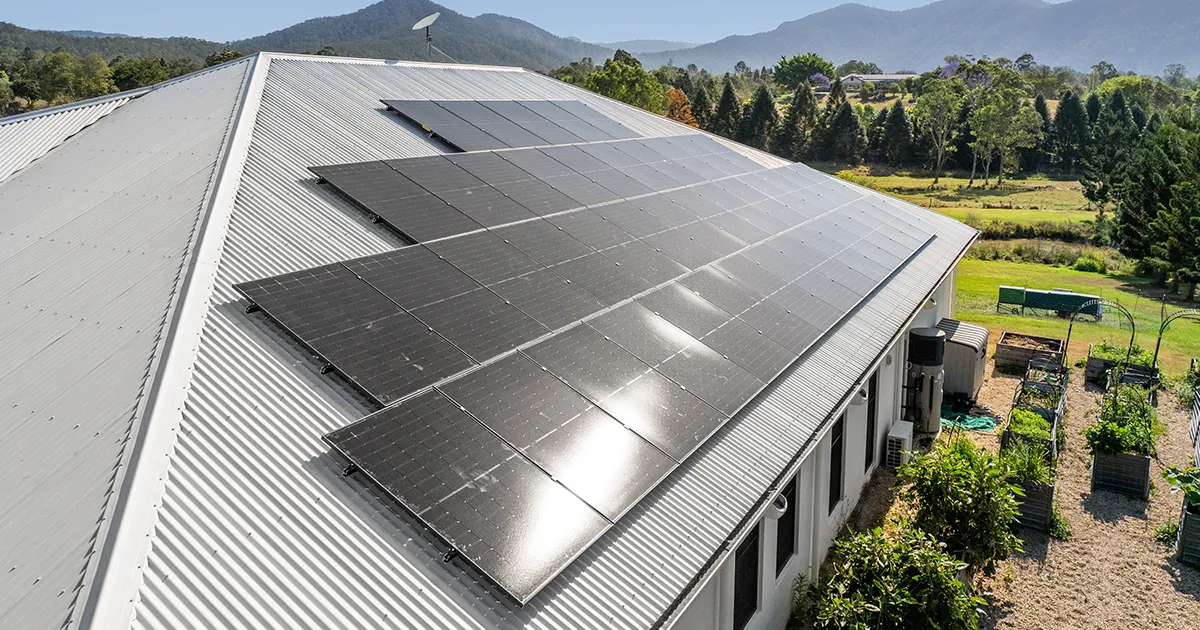
A feed-in tariff (FiT) is what your retailer pays you for solar power you send to the grid. It is measured in cents per kilowatt-hour.
In south-east Queensland there is no minimum rate for feed-in tariffs. Retailers set their own rates and they can change them. Regional Queensland works differently because the rate there is regulated, which is why you won’t see Ergon in our feed-in tariffs comparison table – Ergon retails to regional Queensland not to Brisbane.
For Brisbane residents looking to switch to solar panels or change their electricity provider for better savings, understanding the landscape of solar feed-in tariffs is essential. These tariffs vary significantly among providers and among plans from the same provider, impacting the financial returns of your solar investment.
Feed-in Tariffs in Brisbane
Below, we present a streamlined table showcasing the latest FIT offerings from electricity retailers in Queensland, ranked by their maximum solar FIT rates. This comparative snapshot is designed to help you navigate your options more effectively, ensuring you can make a well-informed decision that maximises your solar savings and aligns with your energy needs.
Why does the same retailer show two different rates?
Different plans have different feed-in tariffs and a retailer can run several plans. That’s why the difference between the highest and lowest rate paid is so wide for some of them.
The reasons for this vary. Some retailers pay a higher rate on the first few kilowatt-hours you export each day and drop to a lower rate after that. Some pay more at particular times. Some attach the better rate to conditions.
The number that matters is the one on the plan you are actually signed up to. The figure touted in an advertisement is usually the best case.
A high feed-in tariff does not always mean a cheaper bill
This is something you simply cannot tell from the table alone.
A retailer paying a generous export rate recovers that money somewhere. Usually through higher usage charges or a higher daily supply charge. If you export a lot and use little, a high feed-in tariff plan can work well. But, if you use more than you export (most households do) the usage rates matter more than the export rate.
So compare the whole plan – the supply charge, usage rates, feed-in tariff and any conditions attached to them. A plan with a 5c feed-in tariff and low usage rates can leave you better off than one paying 12c.
Solar Sharer plans work differently, too
Since 1 July 2026, retailers with more than 1,000 customers in south-east Queensland have had to offer a Solar Sharer plan that gives you three hours of free grid power in the middle of the day.
The Solar Sharer is an opt-in plan and you will need to have a smart meter to get on it. The plan’s rates are set by the Australian Energy Regulator (AER) and they vary by network – which in Brisbane is Energex. Solar Sharer rates on Energex run at 26c through the night and morning, 0c from 11 am to 2 pm, 8c through the early afternoon then 49c during the evening peak, with a daily supply charge of 178c.
Retailers on the Energex network (AGL, Origin, Alinta or whoever) all have to offer this plan and cannot set their own free-usage window or their own rates for it so the costs are broadly the same whichever company you sign up with.
For a solar household, the free window matters less because your panels are already producing at that hour. What stands out is the other end of the day. Exporting at around 5 c and buying back at 49 c during the evening peak is a poor trade any way you look at it.
Our guide to the Solar Sharer Offer covers how it works in more detail.
Is chasing a feed-in tariff still worth it?
Not as much as it used to be and the numbers explain why.
Feed-in tariffs across south-east Queensland have fallen a long way. The difference between what you are paid for exporting and what you pay to buy the same energy back has widened at the same time. That difference is the main reason more and more people are choosing to store their solar power instead of selling it.
A battery saves the power your panels make rather than you exporting it at 5c and buying it back at four or five times that in the evening. Plus, the federal battery rebate takes roughly 30% off the cost of installing a battery. And, it’s in your best interest to take up the rebate offer sooner rather than later since it keeps stepping down and is set to do so again in January 2027.
Working out your next move
Falling tariffs and storage becoming more affordable doesn’t mean everyone should stop chasing tariffs. For anyone not in a position to add storage, the feed-in tariff is still money you could earn and picking a plan that pays a fair rate is still worth doing – but as we’ve explained, the tariff rate is no longer the thing that will make the biggest difference to your bill.
If the export-then-buy-back maths has you leaning toward storage, then whether you should add a battery and the size that fits your needs best depends on your household’s evening energy consumption.
We size and install batteries across Brisbane and South East Queensland and we will tell you honestly if your usage does not justify adding one. Use our Free Quotes page – choose "Solar and battery" and tell us what your evening usage looks like. We will run the numbers on your own bills.